

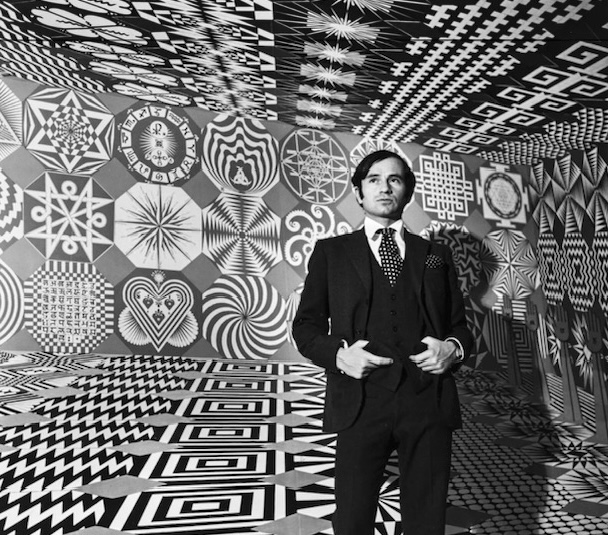
Pedro Friedeberg, the legendary surrealist artist associated with Mexico’s fantastical and eccentric art scene, passed away today at age 90. He was widely considered one of the last great representatives of Mexican surrealism and the creator of some of the most imaginative and iconic objects in modern art.
Born in 1936 in Florence, Italy, Friedeberg later moved to Mexico City, where he became part of a circle of surrealist and avant-garde artists that included figures like “Leonora Carrington and Remedios Varo”. His work rejected traditional artistic conventions and embraced irony, symbolism, and intricate decorative patterns inspired by religion, ancient cultures, and mythology.
He became internationally famous for his 1962 sculpture “La Mano-Silla” (The Hand Chair) a surreal piece of furniture shaped like a giant hand where the palm forms the seat and the fingers become the backrest. The design became one of the most recognizable objects in modern art and design.
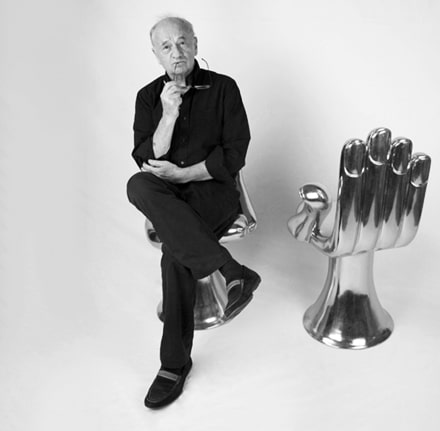
Throughout his long career, Friedeberg produced paintings, sculptures, furniture, murals, and graphic works, all marked by obsessive detail, humor, and philosophical absurdity. His art often explored imaginary architecture, mystical symbols, and dreamlike worlds, reflecting his belief that art should challenge logic and celebrate imagination.
Even late in life, Friedeberg remained a provocative voice in the art world, famously declaring: “Art has died, after surrealism there is nothing new.” Yet his own work continued to inspire generations of artists and collectors around the world.
Today the art world says goodbye to a true eccentric visionary, whose playful yet profound creations transformed everyday objects into portals of surreal beauty.
✨ Descansa en paz, Maestro Pedro Friedeberg your impossible worlds will continue to inspire dreamers everywhere.